

Cutting Lines

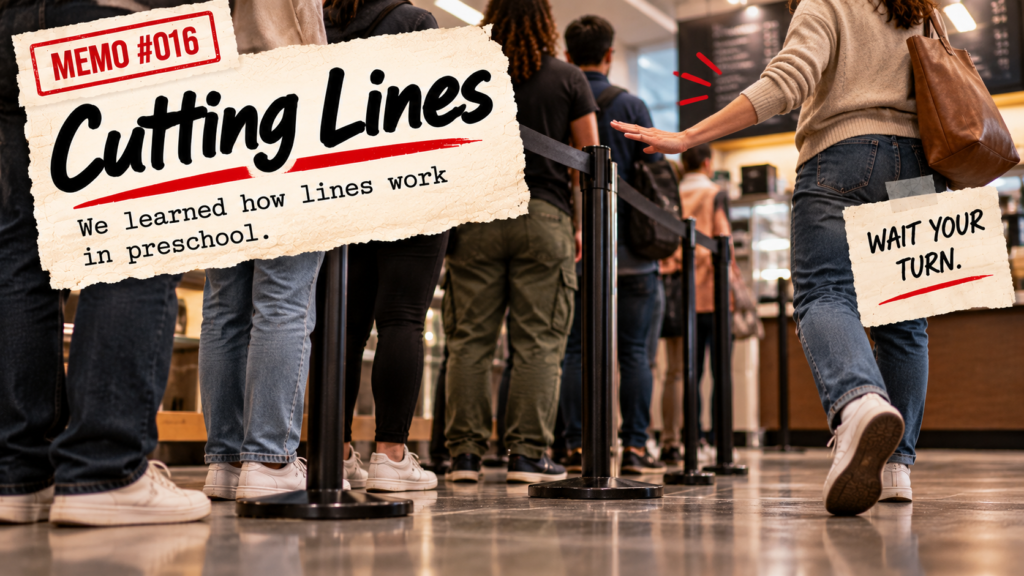
We learned how lines work in preschool. Wait your turn, don’t push ahead, and stop acting like the rules are brand-new information.
The Offense
ACTING LIKE THE LINE DOESN’T APPLY TO YOU
You’re waiting patiently at the grocery store, airport, coffee shop, or event. Someone arrives, sees the line, and casually slides in front of everyone who has been waiting. No question. No explanation. Just a decision that their time matters more than yours. We learned the basics of lining up in preschool. The lesson was not complicated: wait your turn.
The Rant
THIS WAS COVERED BEFORE MULTIPLICATION
Being in a hurry is not an automatic promotion to the front. Neither is confidence, a quick question, or the assumption that nobody will say anything. Everyone has responsibilities and schedules. You don’t know what the people behind you need to get to. A line is a shared agreement about order. If everyone cuts whenever it suits them, the line stops working. If you need to ask a question, ask without assuming your place should change. If your group arrives late, don’t automatically expect everyone else to absorb the delay.
The Exception
NOT EVERY CHANGE IN ORDER IS CUTTING
A medical emergency, accessibility need, designated priority lane, staff instruction, or explicit invitation to go ahead may justify a different order. Sometimes lines are poorly marked or there are multiple queues. Ask respectfully when needed, and don’t assume someone using priority service is getting unfair treatment. The issue is entitlement—not legitimate needs or reasonable accommodations.
The Memo
FIND THE BACK OF THE LINE
When people are waiting for the same service, find where the line begins and join it. If you need an exception, explain why and ask politely. If someone lets you go ahead, accept graciously. We learned this in preschool. It still applies when you’re an adult with a calendar and a credit card.